You are paying for training, driving to practice, and watching your son work hard. But you are not a defensive line coach, so how do you know if the person coaching him actually knows the position, or is just a good athlete running drills he half-remembers from his own playing days? This is one of the most common questions we get from parents in Pearland, Katy, and across the Houston area, and it is a fair one.
Defensive line is a technical position. Unlike a lot of skill positions where raw athleticism can carry a player through high school, defensive line technique compounds — bad habits get baked in and are much harder to fix at 16 than at 12. The coach your athlete has right now is shaping the technical ceiling he will play with for years.
Watch the Stance Before Anything Else
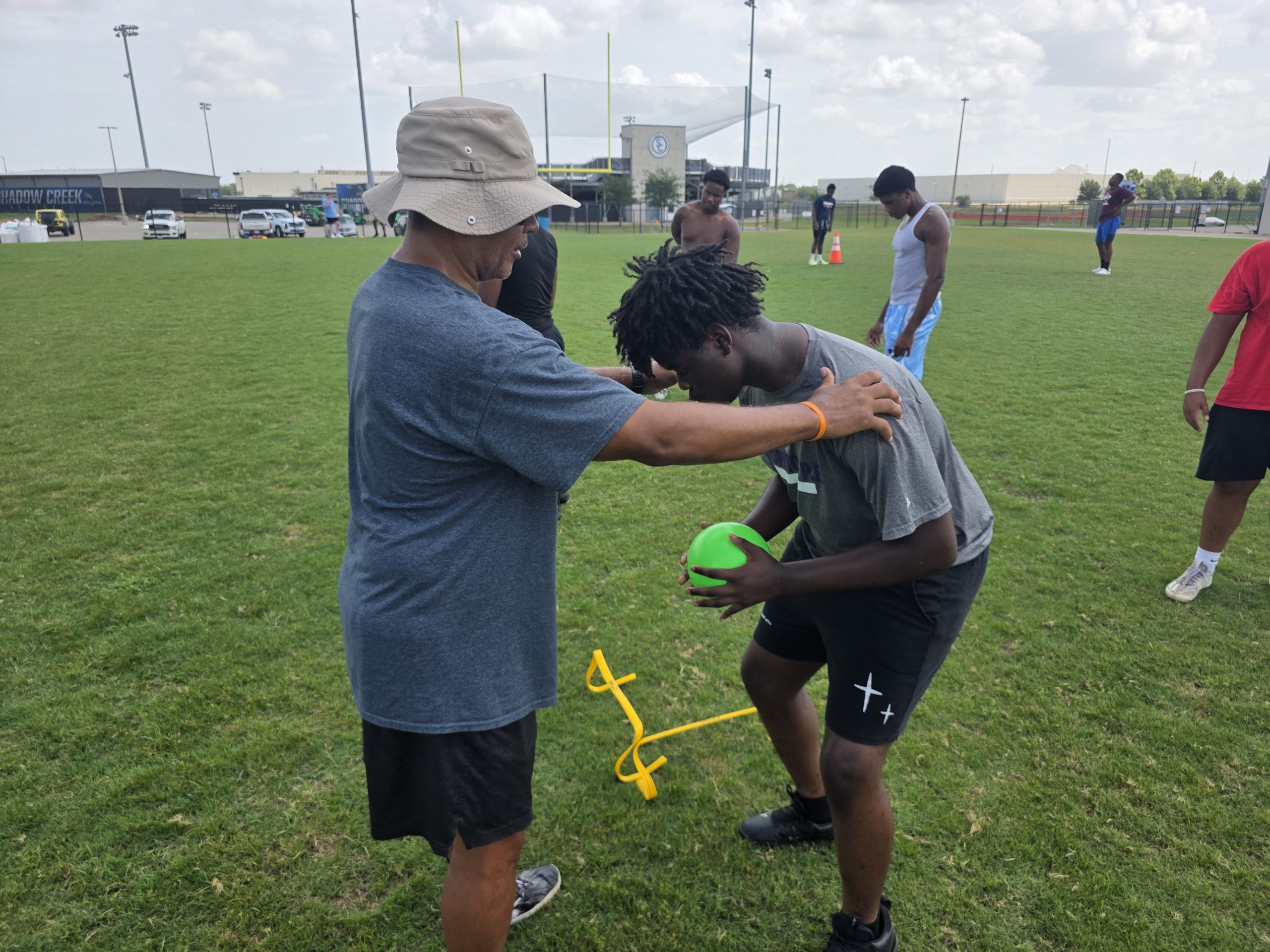
A knowledgeable DL coach corrects stance constantly, even with advanced players. Weight distribution, hand placement on the ground, foot stagger — these details get checked rep after rep, not just on day one. If practice moves straight into pass rush moves without stance corrections, that is a signal the coach is teaching moves without teaching the foundation those moves depend on.
Ask These Three Questions
- “What does your athlete need to work on specifically?” A real DL coach can answer this in one sentence about a specific technical flaw — not “he needs to work harder.”
- “How do you teach disengagement?” If the answer is vague or focuses only on power, that is a sign hand fighting and separation technique are not being coached.
- “What’s the get-off cue you’re teaching?” Coaches who understand reaction time will mention watching the ball, not the snap count.
Common Mistakes Parents Make When Choosing a Coach
- Confusing playing experience with coaching ability. A former college or NFL lineman may or may not know how to teach a 13-year-old the same skill he learned by instinct.
- Judging a program by intensity instead of technique. Loud, high-effort practices feel productive, but effort without correction just reinforces bad habits faster.
- Not watching a session before committing. Every reputable program should let you observe a practice before you sign up for a training block.
Real Talk
Most parents never get to see behind the curtain of what “good coaching” looks like at this position, and that is not their fault — it is a specialized skill set. A coach who only knows how to run drills, without the ability to diagnose why a specific rep failed, will plateau your athlete. Your son deserves a coach who can watch one rep and tell you exactly what went wrong and how to fix it. That is coachable. Loud encouragement is not.
Parent Checklist: Evaluating a DL Coach
| What to watch for | Green flag | Red flag |
|---|---|---|
| Stance corrections | Given constantly, even to advanced players | Rarely mentioned after week one |
| Individual feedback | Specific to each athlete’s technical flaw | Generic (“push harder,” “run faster”) |
| Drill progression | Builds from fundamentals to combinations | Jumps straight to advanced moves |
| Willingness to explain “why” | Explains the mechanism behind a drill | “Just trust the process” with no detail |
If you want to see what technical, detail-focused coaching looks like, come watch a session at Elite Defensive Line Academy. We train athletes throughout Pearland, Katy, Alvin, and the greater Houston area, and we will happily walk you through exactly what we are working on and why. Reach out through our webform or email CoachWalker@elitedline.com to schedule a visit.