Your defensive lineman is fast. Explosive off the snap. But he gives up 40 pounds to every offensive tackle he faces.
The bull rush? Not happening. The power move? Stalemate.
You have started to wonder: Can my child ever dominate if he is not the biggest guy on the field?
The answer is yes. But not with power-based moves.
He needs the Ghost move.
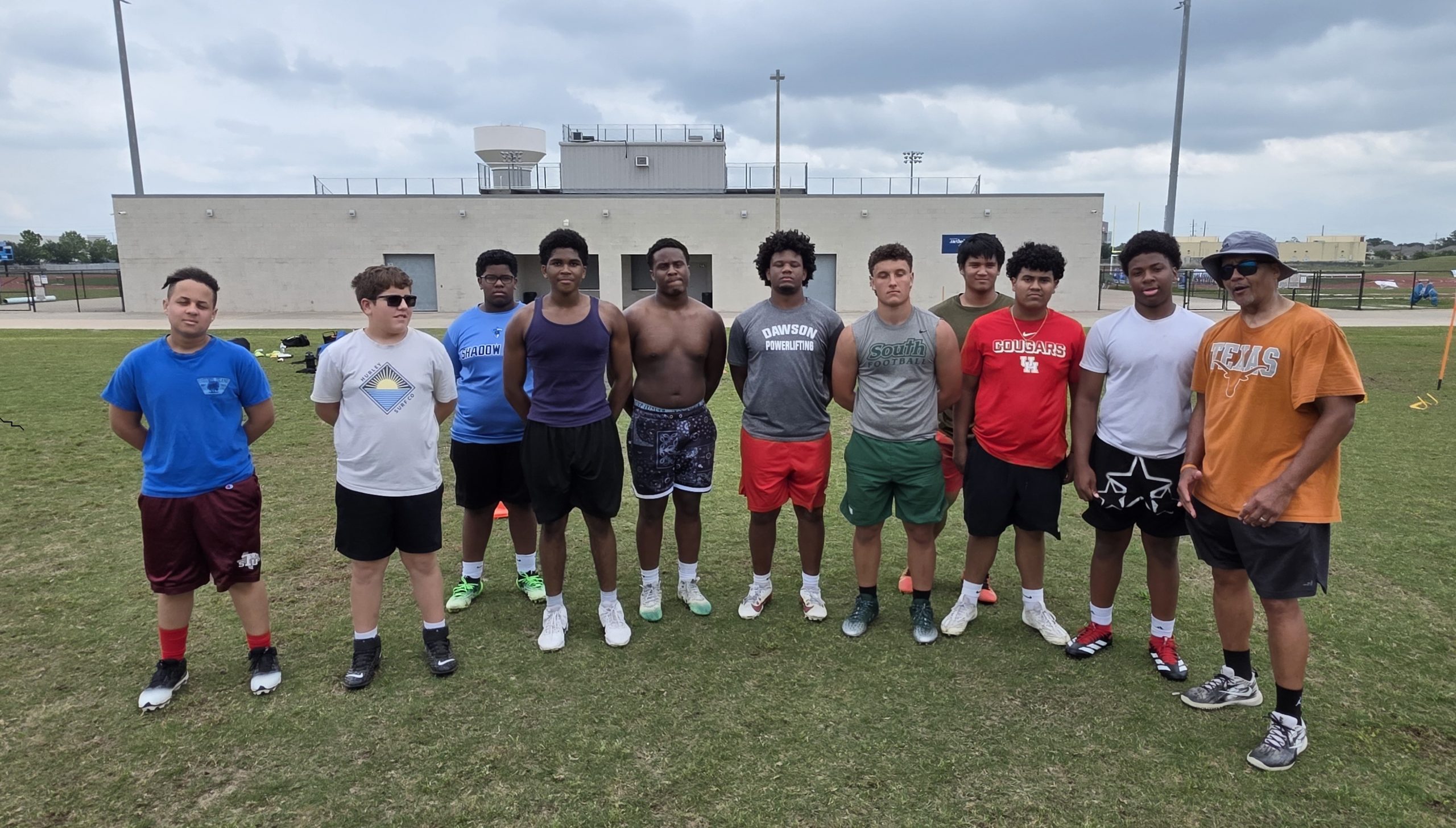
At Elite Defensive Line Academy, we train defensive linemen of all sizes. Some of our most effective pass rushers are 190-pound high school players who wreak havoc on 250-pound tackles. Their secret? A low-risk, high-reward move that requires no strength advantage whatsoever.
Let me teach it to you.
What Is the Ghost Move?
The Ghost is a two-part pass rush that makes the offensive lineman block air.
Part 1: Attack the outside shoulder with speed – sell the outside rush
Part 2: Plant, pivot, and cross back inside as the OT lunges
The offensive lineman “ghosts” – he swings at nothing. Your player is already behind him, heading for the quarterback.
NFL defensive ends like Micah Parsons and Maxx Crosby use variations of this move constantly. It works at every level because it exploits human reaction time, not size.
Why Undersized DLs Need This Move
If your child is smaller, every snap is a math problem:
| Move | Requires | Works for undersized? |
|---|---|---|
| Bull rush | Mass + hip drive | No |
| Power rip | Upper body strength | Sometimes |
| Swim move | Arm length + timing | Yes |
| Ghost | Speed + footwork only | Yes |
The Ghost does not ask your player to move the offensive lineman. It asks him to make the OL move himself – then run past the empty space.
That is why undersized players who master the Ghost consistently out-produce bigger, slower teammates.
The 4-Step Ghost Breakdown
Step 1: The Outside Sell (First 2 Steps)
Your player takes two hard steps toward the offensive tackle’s outside shoulder (the shoulder away from the QB). Hands come up like a speed rush. Eyes look upfield like he is turning the corner.
What the OL sees: “He is trying to run around me.”
What the OL does: Starts kicking out laterally to cut off the outside path.
Step 2: The Plant
On the second step, your player plants his outside foot (the foot closest to the sideline) hard into the ground. The toe points back inside.
This is the critical moment. The plant must be violent and sudden.
Step 3: The Cross
Your player drives his inside foot across his body, aiming for the offensive lineman’s inside hip (the hip closest to the QB).
Do not run sideways. Run downhill. The path should be a sharp 45-degree angle back toward the quarterback’s face.
Step 4: The Finish
The offensive lineman is now leaning outside, off balance. Your player crosses his face and closes on the quarterback in less than two seconds.
No block to shed. No hand fight. Just grass and the QB.
The 10-Minute Ghost Drill Circuit
You do not need a partner or expensive equipment for most of this. A yard, cones, and 10 minutes are enough.
| Time | Drill | What to focus on |
|---|---|---|
| 0:00-2:00 | Walk-through Ghost (no speed) | Footwork order: outside step → plant → cross |
| 2:00-4:00 | Slow Ghost with a cone as the OT | Hit each step deliberately |
| 4:00-7:00 | Full-speed Ghost against a bag or partner | Violent plant. Sharp angle. |
| 7:00-10:00 | Ghost into a finish (hit a dummy or shield) | Do not slow down after crossing |
Do this three times per week. After two weeks, the footwork becomes automatic.
Common Ghost Mistakes (And How to Fix Them)
Mistake: The Plant Is Too Soft
What happens: The OL recovers and mirrors the inside move. No separation.
The fix: Drive the plant foot into the ground like you are stomping a can. The grass should tear.
Mistake: The Angle Is Too Wide
What happens: Your player runs parallel to the line of scrimmage, not toward the QB. He never gets home.
The fix: Aim for the OL’s inside hip bone. If you hit the hip, the angle is correct.
Mistake: Selling the Outside Rush for Too Long
What happens: Your player takes three or four outside steps. The OL never commits. The Ghost window closes.
The fix: Two outside steps. Maximum three. Commit or abort.
When to Call the Ghost (And When Not To)
Call the Ghost when:
- The offensive tackle is aggressive and over-sets outside
- Your player has a speed advantage
- It is 2nd or 3rd down (passing situation)
Do NOT call the Ghost when:
- The tackle is sitting on inside moves (he is expecting it)
- Your player is gassed (the plant requires explosion)
- It is a run play (obviously)
Real Talk: This Move Takes Repetition
The Ghost feels unnatural at first. Young players want to run fast in a straight line. Changing direction mid-rush requires trust.
But once it clicks? Your child will start embarrassing offensive linemen who outweigh him by 50 pounds.
And that feeling? That is when parents stop searching for answers and start watching their kid dominate.
Want to Learn the Ghost (and 5 More Undersized Moves)?
You have read the breakdown. Now your child needs to feel it.
If you have been looking for defensive line training near me that actually teaches technique over size, come train with us. We specialize in making smaller, faster defensive linemen into nightmares for offensive coordinators.
We offer d line training near me and football training near me for middle school, high school, and college athletes. Our summer football camps in Texas are the best place to learn low-risk, high-reward pass rush moves like the Ghost.
📍 Location: Shadow Creek High School, 11850 Broadway St., Pearland, TX 77584
📧 Contact: Reach out through our website
📱 Follow us on X/Twitter for last-minute location updates
👉 Sign up now – spots fill quickly before camp season