Most defensive linemen line up and react.
The ball snaps. They read the offensive lineman’s first move. Then they try to win.
That is playing behind the down.
Elite defensive linemen play ahead of the down. They know run or pass before the ball is snapped. Sometimes they even know which gap.
How? Pre-snap stance cues.
At Elite Defensive Line Academy, we spend as much time teaching stance reading as we do hand placement. Because if your child knows what is coming, he can explode out of his stance with certainty – not hesitation.
Here are 5 offensive line stance cues that every defensive lineman should recognize in under 3 seconds.
Why Stance Reading Wins Games (Before the Snap)
According to college coaching data, defensive linemen who identify run/pass pre-snap are 40% faster off the ball. Not because they are quicker. Because they are not thinking.
When your player knows it is a run, he fires low and hard into his gap.
When he knows it is a pass, he sets up his pass rush move immediately.
When he is guessing? He hesitates. And hesitation is defeat in the trenches.
Cue #1: Weight Distribution (The Leak Test)
What to look at: The offensive lineman’s waist and hips
Run tell: Weight is forward – you can see his belt buckle tilted toward the line of scrimmage. He is loading up to drive block.
Pass tell: Weight is back – he is sitting into his heels, ready to kick-slide backward.
What your player does:
- Run weight = fire into his chest with a low, hard punch
- Pass weight = sell a speed rush to the outside immediately
Cue #2: Hand Placement on the Ground
What to look at: The offensive lineman’s down hand (if in a 3-point or 4-point stance)
Run tell: Hand is directly under his shoulder or slightly behind his head. He is balanced to fire forward.
Pass tell: Hand is reaching forward, way past his shoulder. He is leaning into a pass set.
Exception: Some teams teach a neutral hand placement. If you cannot tell from the hand alone, move to cue #3.
Cue #3: Inside Foot vs. Outside Foot
What to look at: Which foot is back in the offensive lineman’s stance
Run tell (zone block): Outside foot back. He is preparing to step laterally and hook your player.
Run tell (down block): Inside foot back. He is coming downhill directly at your player’s face.
Pass tell: Feet are even (2-point stance) or inside foot back with a high pad level. He wants to move backward smoothly.
What your player does:
- Outside foot back = expect a zone run away from you
- Inside foot back = expect power or counter coming at you
Cue #4: Helmet Height
What to look at: Where the offensive lineman’s helmet sits relative to his shoulders
Run tell: Helmet is low – the earholes are at or below shoulder pad level. He is ready to fire out with his face up.
Pass tell: Helmet is high – you can see his neck. He is ready to retreat into pass protection.
What your player does: Low helmet = anchor and prepare for collision. High helmet = attack his outside shoulder immediately.
Cue #5: The Guard’s First Look (For Interior DLs)
What to look at: The offensive guard’s eyes and head position
Run tell: Guard looks to the side (toward the play side) or down at his keys. He is reading his combo block.
Pass tell: Guard looks straight ahead at your player (or the linebacker behind you). He is preparing to pass set.
For defensive tackles: If both guards look at you pre-snap? It might be a double team. Alert the linebacker.
How to Practice Stance Reading (5-Minute Drill)
You do not need a full offensive line to practice this. Just a partner, video, or even watching college football on TV.
The “Name the Play” Drill
| Step | What to do |
|---|---|
| 1 | Watch an offensive lineman in his stance (live or on film) |
| 2 | Have 3 seconds to call “run” or “pass” based on the 5 cues above |
| 3 | The partner (or coach) reveals the actual play |
| 4 | Track accuracy – goal is 80% or higher |
Do this: 5 minutes per day, 4 days per week
After one month: Your child will start seeing plays before the snap. His teammates will ask how he knows.
The 3-Second Pre-Snap Routine
Teach your defensive lineman this exact routine before every snap:
| Seconds | Action |
|---|---|
| 3-2 seconds | Look at weight distribution (cue #1) |
| 2-1 seconds | Look at hand placement and helmet height (cues #2 and #4) |
| 1-0 seconds | Check the foot back (cue #3) |
| Snap | Explode with confidence |
Do not try to see all 5 cues every snap. Pick 2-3 that your player can process quickly. Speed matters more than volume.
What About Play Action?
Play action is designed to look like a run then turn into a pass. How do you read that?
The tell: The offensive lineman’s first step.
- If he fires forward for 1 step then retreats = play action
- If he fires forward and stays forward = run
- If he retreats immediately = pass
Train your player to watch the first foot movement post-snap. That reveals the truth.
Real Talk: Stance Reading Takes Discipline
Young defensive linemen want to watch the ball. Or the running back. Or the quarterback.
Teach them to watch the man across from them first. The offensive lineman tells the truth with his stance hundreds of times per game. Most defensive linemen never listen.
The ones who do? They become all-district, all-state, and college prospects.
Ready to Turn Your DL Into a Pre-Snap Predictor?
You have read the cues. Now your child needs to practice applying them against real offensive linemen.
If you have been searching for defensive line training near me that teaches the mental game – not just drills – come train with us. We incorporate stance reading into every single rep at Elite Defensive Line Academy.
We are the premier d line training near me and football training near me in the Houston area. Our summer football camps in Texas focus on playing fast by knowing what is coming.
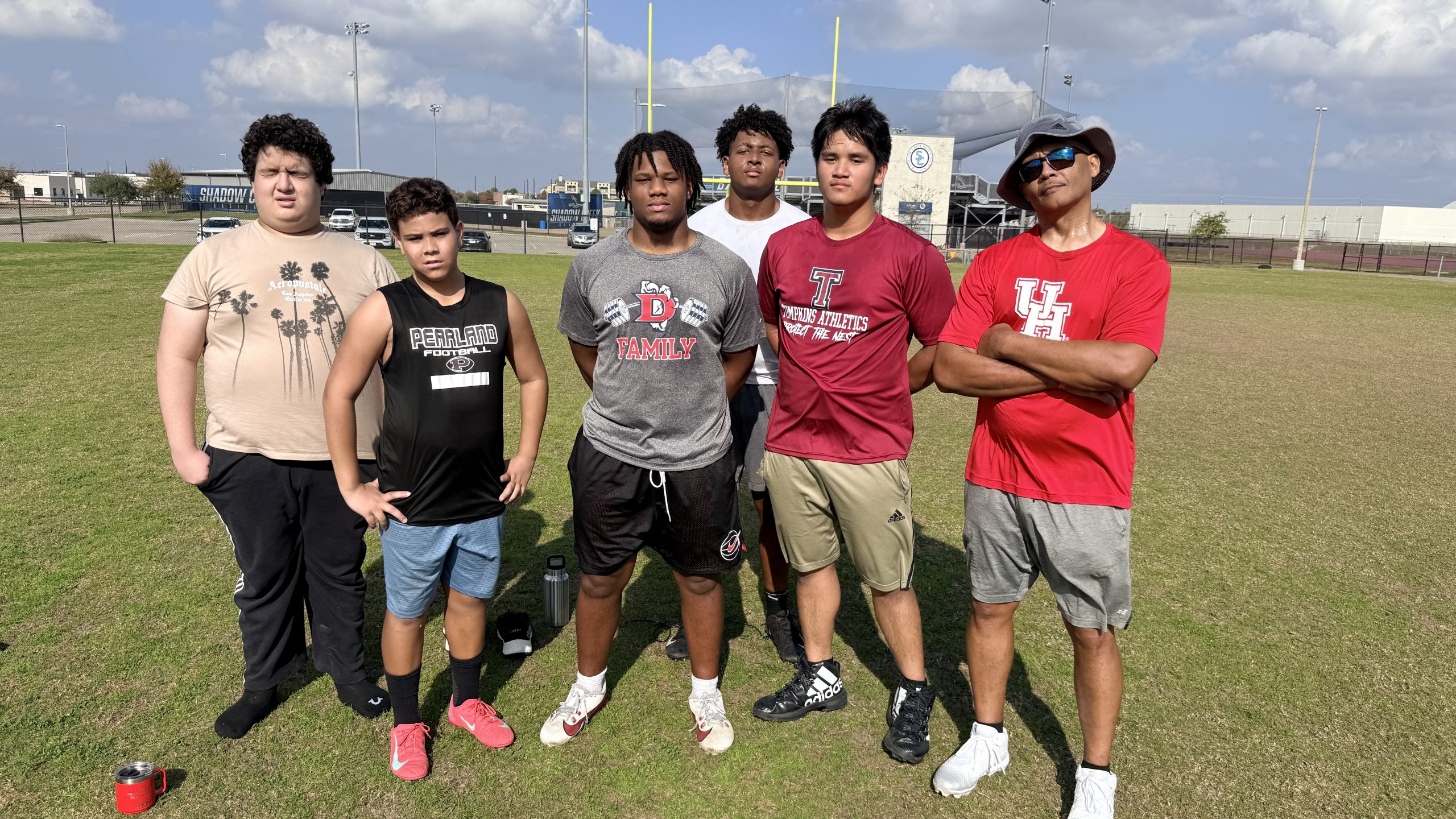
📍 Location: Shadow Creek High School, 11850 Broadway St., Pearland, TX 77584
🧢 Bring: Cleats, gloves, water (no water on site)
🚽 Bathrooms: Go before you arrive
👉 Contact us now to schedule a session or ask about our upcoming football training in Houston